Why the Install Matters as Much as the Filter
Most of what your air filter catches, you never see. Pollen, pet dander, drywall dust, and the fine grit that slips in every time the front door opens keep riding through your home until something stops them. A filter that fits its slot and faces the right way does exactly that, while one sitting backward or running a hair too small lets the mess slide right past. I found that out the slow way, after a backward filter ran in my own system for two weeks before I noticed the vents had gone quiet. Airflow that weak can point to a bigger problem worth emergency repair options, though most of the time the fix is the filter itself.
It all starts with a correctly sized 11.5x11.5x1 air filter, because even a slightly-off size leaves gaps that let dust sneak around the edges. The steps below are the ones I run in my own home, and they work whether your slot sits behind a return grille or inside the blower compartment. Get the size right and mind which way it faces, and the install itself takes about five minutes.
TL;DR Quick Answers
- Check the frame for 11.5x11.5x1 before you buy, and consider keeping spare filters on hand so the next change takes seconds.
- Shut the system off.
- Find the arrow on the old filter, then pull it out.
- Slide the new one in with the arrow aimed at the blower.
- Press it flush with no gaps, close up, switch the power back on, and date the frame.
Top Takeaways
- Match the size on the frame exactly. Here that means 11.5x11.5x1.
- The arrow points toward the blower, the same way the air travels.
- A snug, gap-free fit does as much for reducing airborne irritants at home as the MERV number does.
- Kill the power before the slot comes open.
- Date the frame so the next change is not a guessing game.
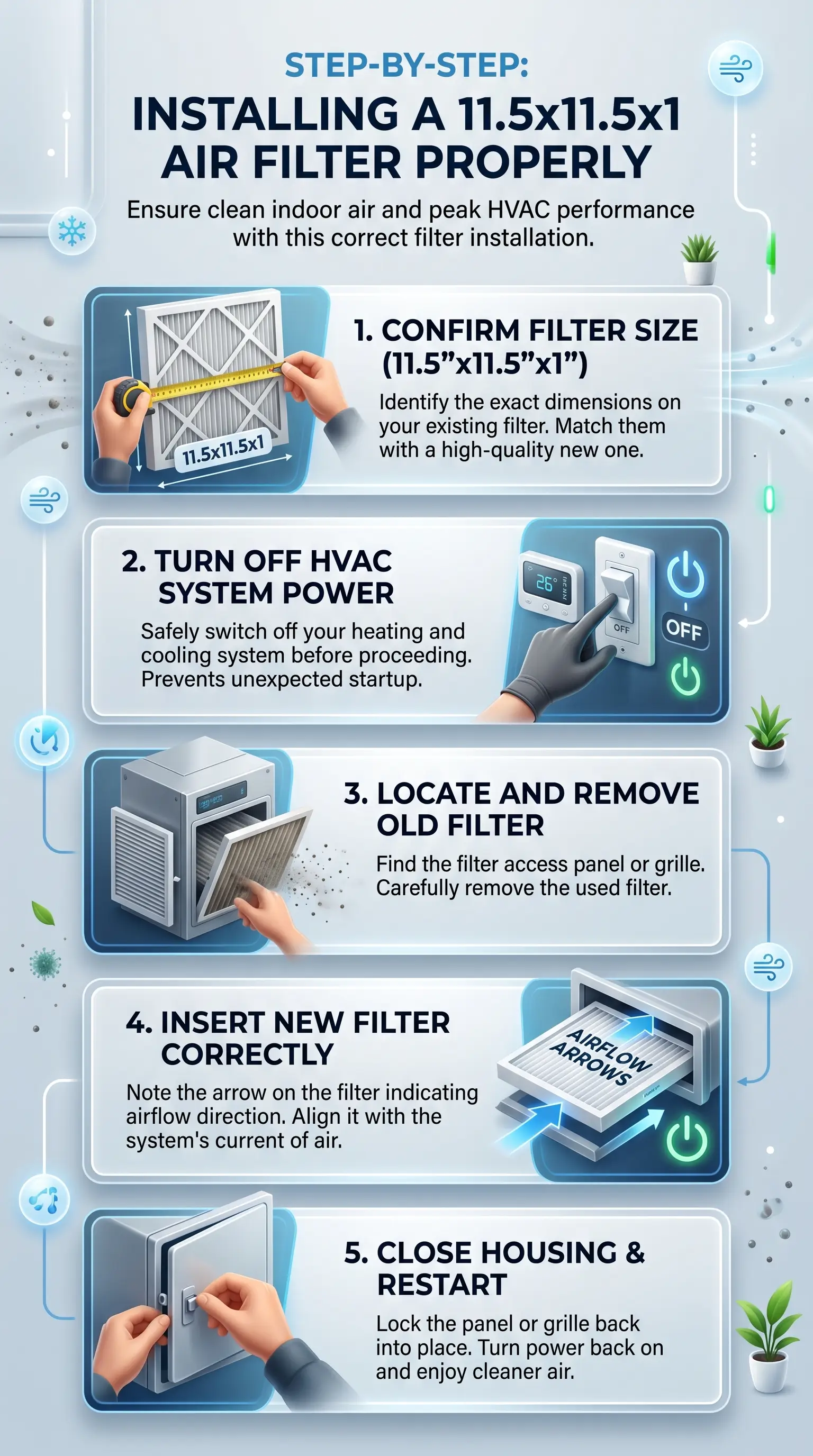
How I Install an 11.5x11.5x1 Filter, Step by Step
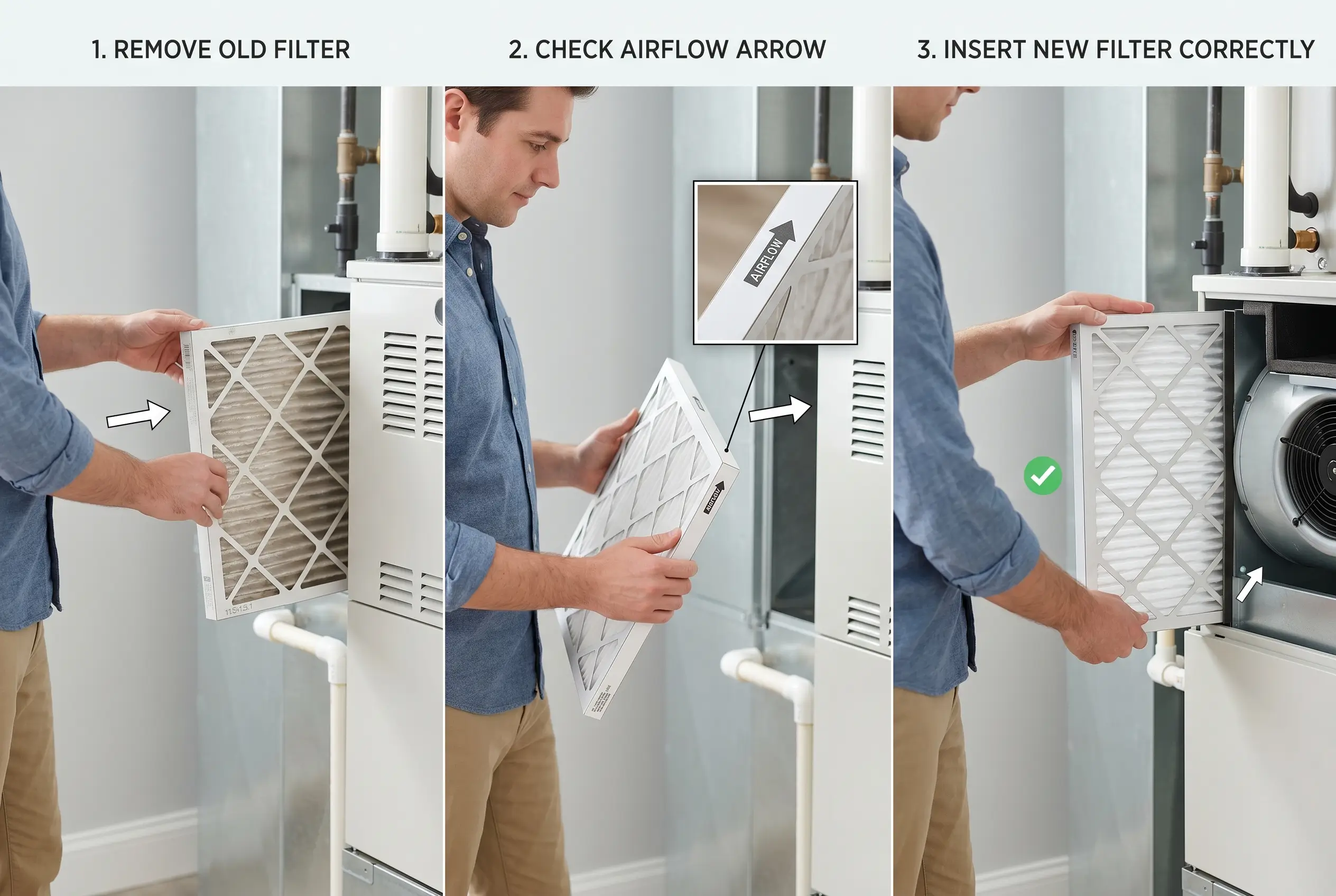
- Read the frame. The size is printed right on the cardboard edge, and it should say 11.5x11.5x1. If your current one fits well, buy that same size again so the new filter keeps capturing more household dust instead of letting it drift past.
- Shut the system down. Set the thermostat to off, or flip the service switch by the air handler, so the blower is not pulling air while the slot is open.
- Locate the slot. In most homes it hides behind a return grille on a wall or ceiling, or tucks into the blower compartment beside the furnace or air handler.
- Find the arrow before anything moves. Every old filter has one printed on the frame, showing which way the air flows. An air filter only earns its keep when it faces that direction, so I check the arrow before I lay a finger on it.
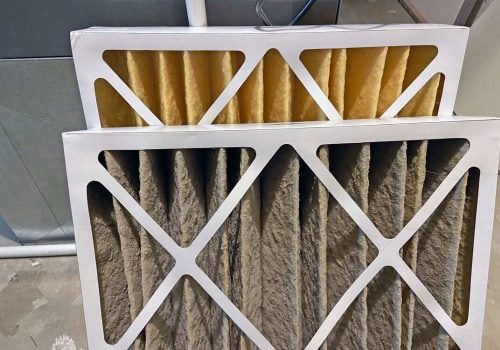
- Pull the old one straight out and set it aside. If it comes out gray and matted, you timed the change about right.
- Wipe the slot. One quick pass with a dry cloth clears the loose grit so it does not get pulled in behind the fresh filter.
- Slide the new filter in, arrow toward the blower. That arrow always follows the airflow, away from the return and into the furnace or air handler, which is where the filter does the most trapping fine airborne particles before they reach your coil.
- Seat it flush. The frame should sit all the way in with no gaps along the edges. A filter that bows or leaves a sliver of space lets air slip around it, which quietly undoes the work of filtering out everyday allergens.
- Close it up and bring the power back. Reset the grille or panel, switch the system on, and listen for steady air at the vents.
- Date the frame. A quick marker note tells you when the next change is due, the same way a regular maintenance plan keeps the rest of the system on track.
“A filter only guards your air and your equipment when it sits flush and faces the right way. I have pulled too many that were the right size but loaded backward, and the homeowner never connected it to the creeping power bill.”
Seven Trusted Resources I Keep Coming Back To
When I want to double-check something on filters or airflow, these are the sources I keep close.
- EPA: Guide to Air Cleaners in the Home lays out how to choose a furnace or HVAC filter and what those MERV numbers actually mean.
- U.S. Department of Energy: Air Conditioner Maintenance shows where the filter sits in a central system and why a clean one holds efficiency.
- American Lung Association: Air Cleaning explains how filtration fits into cleaner indoor air.
- Building America Solution Center: High-MERV Filters digs into system compatibility and the airflow trade-off that comes with higher ratings.
- Asthma and Allergy Foundation of America: Air Cleaners, What You Need to Know is a straight primer for homes dealing with allergies.
- ENERGY STAR: Heat and Cool Efficiently covers the simple filter habits that protect both your system and your bill.
- Northeast Technical Institute: Changing Your Furnace Air Filter gives a plain walkthrough from an HVAC training program.
Three Numbers That Make the Case for a Clean Filter
- We spend something like 90% of our lives indoors, and the air in there can be dirtier than the air outside, according to the EPA’s guide to indoor air quality. What rides through your filter is worth a second thought.
- A clogged filter and other airflow problems can drag a heating and cooling system’s efficiency down by as much as 15%, per the ENERGY STAR maintenance checklist.
- Close to 25 million people in the United States, roughly 7.7%, live with asthma, based on the CDC’s most recent national asthma data, and indoor allergens are a frequent trigger.
My Honest Take After a Lot of Filter Swaps
If you asked me for the single habit that has done the most for my home’s air, it is changing the plain filter on time and seating it right, not chasing a fancier one. Size and MERV get all the attention, yet a snug filter beats a high-rated one shoved in crooked every time, which is why I like stocking up on cleaner air in the right size before I run out. Treating the swap as a two-minute habit instead of a chore has kept my vents cleaner and my dust down, and it has kept my bills off the kind of climb that ends with getting a repair estimate. Keep a spare on the shelf, and you will never put it off.
Frequently Asked Questions
Which way should the airflow arrow face?
Toward the blower, furnace, or air handler — the direction the air heads once it leaves the return. Feel for which way the system pulls, and the arrow follows it. If the airflow still feels weak after a clean install, that is usually the moment to look at a seasonal tune-up.
How often should I change an 11.5x11.5x1 filter?
Every 60 to 90 days suits most one-inch filters. Homes with pets, smokers, or allergy sufferers do better on a 30-to-60-day cycle, which also goes a long way toward cutting down lingering odors.
What if I can’t find the exact 11.5x11.5x1 size locally?
It is an odd size, so ordering online usually beats hunting store shelves. Buying online also makes it easy to compare filters built for steady protection from dust buildup. Whatever you do, don’t force a close-but-wrong size into the slot, because the gaps let unfiltered air through.
Does a higher MERV rating always mean better?
Not always. A higher rating grabs finer particles, but it also fights airflow harder, and not every system is built for that. If yours strains even with the right filter, an upgrade or replacing an aging system may be the smarter long game.
Can I run the system without a filter for a day?
Better not to. Even a short run with no filter lets dust settle on the blower and coil, which is the exact buildup that makes add-ons like an added air-treatment upgrade start to look worth it.
Set Your Home Up for Cleaner, Easier Air
A correctly sized filter, seated the right way, is one of the smallest upgrades that does the most for the air your family breathes and the system that moves it. Check your size, point it the right direction, then pair the habit with keeping your vents clear for steadier airflow all year.
Learn more about HVAC Care from one of our HVAC solutions branches…
Filterbuy HVAC Solutions - Miami FL - Air Conditioning Service
1300 S Miami Ave Apt 4806 Miami FL 33130
(305) 306-5027
https://maps.app.goo.gl/Ci1vrL596LhvXKU79