Wildfire Smoke Prep For 16x22.25x4 Air Filters
TL;DR
Wildfire smoke season calls for a filter check, not just a calendar reminder. A standard MERV 8 furnace filter is built to protect equipment, not to stop the fine particles in smoke, so a home running a 16x22.25x4 filter should confirm the MERV rating before smoke arrives and have a MERV 13 option ready. This checklist covers the filter check, the replacement schedule during an active smoke event, and the extra steps the EPA recommends for keeping indoor air clean when skies turn hazy.
Skies turn hazy again, but most wildfire-smoke advice never checks your filter's actual MERV rating. Filterbuy manufactures the 16x22.25x4 size in MERV 8, MERV 11, and MERV 13, and only the MERV 13 version clears the EPA's smoke-filtration threshold. That specific number drives this checklist, along with the replacement schedule and clean-air-room steps that follow.
Key Takeaways
A standard MERV 8 filter protects equipment, not lungs, during a smoke event. Run MERV 13 or higher instead.
A 16x22.25x4 filter ships in MERV 8, MERV 11, and MERV 13. Only the MERV 13 option meets the EPA's smoke filtration minimum.
Replace filters more often during active smoke. Heavy soiling shows up faster than the usual 90-day cycle.
Set the HVAC system to recirculate mode and run the fan continuously so indoor air keeps passing through the filter.
Build a clean air room and skip activities that add particles indoors, including frying, candles, and vacuuming without a HEPA filter.
What Should Be On A Wildfire Smoke Season HVAC Checklist?
A wildfire smoke season HVAC checklist covers four things: check the current filter's MERV rating, upgrade to MERV 13 if it is lower, switch the HVAC system to recirculate mode with the fan running continuously once smoke arrives, and build a clean air room stocked with a portable air cleaner. Each step targets the fine particles that a standard filter is not built to stop.
Most furnace filters are chosen for airflow and equipment protection, not for capturing the fine particulate matter known as PM2.5, the main health concern in wildfire smoke. The EPA recommends stepping up to a MERV 13 filter, or the highest rating the HVAC system can handle, before smoke season starts. The sections below break that recommendation into steps a homeowner can complete before or during an active smoke event.
Short-term exposure to fine particles in smoke can range from minor eye and airway irritation to more serious flare-ups such as asthma attacks and heart failure, which is part of why the EPA treats indoor filtration as a frontline defense rather than an optional upgrade.
Is A 16x22.25x4 Air Filter Ready For Wildfire Smoke?
Confirming readiness comes down to one physical check, not a guess. Read the MERV number printed on the filter frame. MERV 8 or MERV 11 means the filter is not yet smoke-ready, and MERV 13 means it already is.
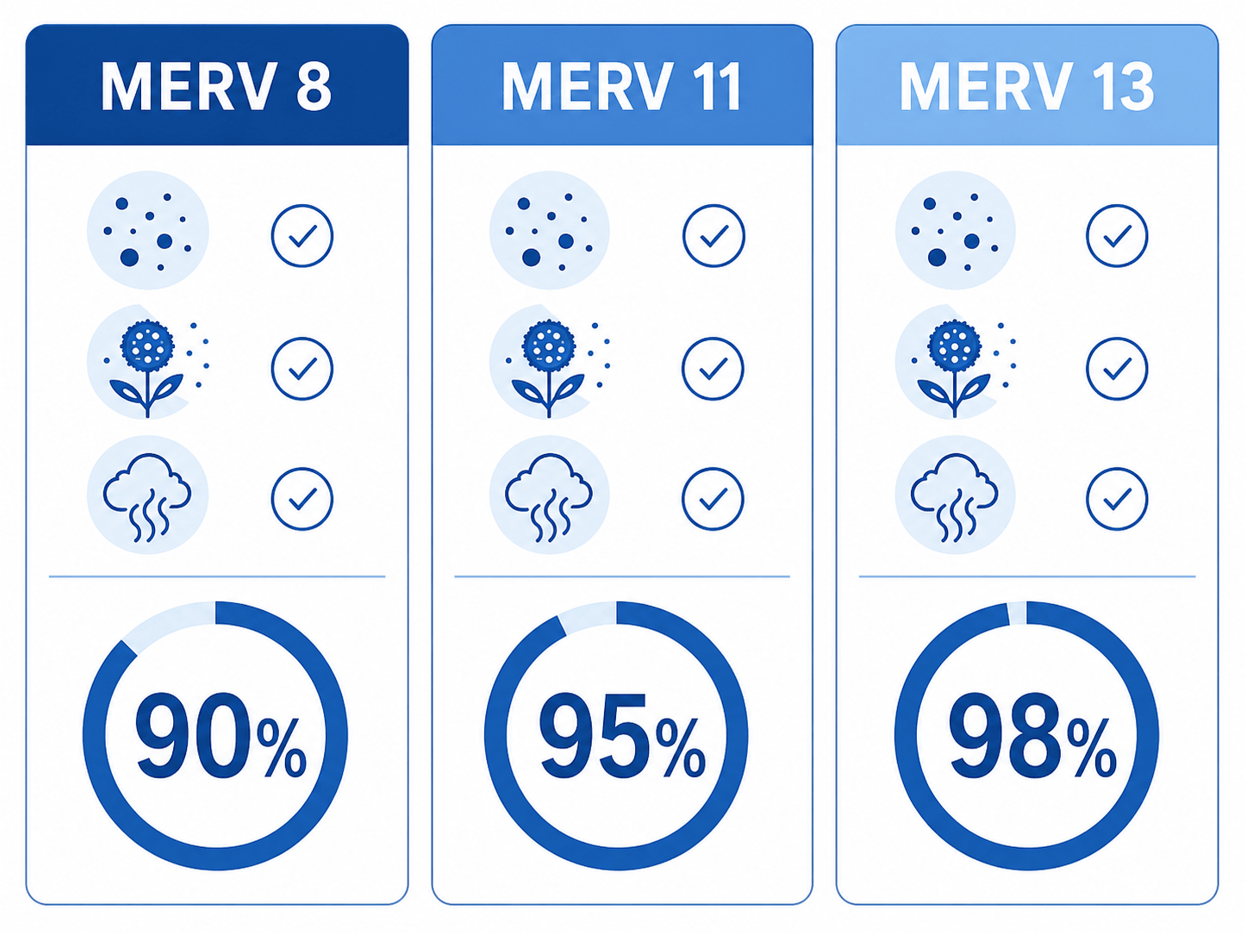
Filterbuy is a U.S.-based direct-to-consumer manufacturer of pleated MERV-rated air filters, offering the 16x22.25x4 size in MERV 8, MERV 11, and MERV 13 options for exact-fit HVAC systems. The nominal 16x22.25x4 label is rounded for convenience. The actual dimensions run closer to 16.00 x 22.25 x 3.63 inches, and that small gap between nominal and actual size is exactly what causes an air bypass gap when a shopper grabs the wrong filter by rounding down. The table below shows how the three ratings compare for a home preparing for smoke season.
Filterbuy's 16x22.25x4 air filter is available in MERV 13, which captures 98% of airborne particles, meeting the EPA's recommended MERV 13 minimum for filtering wildfire smoke.
Two details settle the check faster than pulling up a receipt or a product page. The filter frame has a printed airflow arrow, and that arrow needs to point toward the furnace or air handler, not away from it, or the pleats will not seat correctly. The MERV number is usually stamped on the same frame, right next to that arrow.
Homeowners who confirm their current filter is MERV 8 or MERV 11 can check Filterbuy's 16x22.25x4 air filters lineup for the MERV 13 option before smoke season peaks.
Should You Upgrade Your 16x22.25x4 Filter To MERV 13 Before Smoke Season?
In most homes, yes. MERV 13 is the rating the EPA points to for smoke filtration, and a 16x22.25x4 slot already accepts it, so there is no size change involved, only a rating change. The one exception is an older or lower-airflow HVAC system, where a denser MERV 13 filter can restrict airflow more than the blower is designed to handle.
Ask an HVAC professional to confirm the system can handle MERV 13 before switching, especially on systems more than ten years old. If the system cannot handle MERV 13, a portable air cleaner with a HEPA filter can fill the gap in a single room while the whole-house filter stays at a lower rating.
A local HVAC company can help with this call. Their guide on balancing filter efficiency with airflow walks through how a higher MERV rating can restrict airflow if the system was not built for it.
A household that relies on a window or wall-mounted air conditioner instead of central HVAC will not have a 16x22.25x4 filter to upgrade in the first place. Those units filter only the air passing through their own small intake, not the whole room, so the better move is a portable HEPA air cleaner sized for the room and closed windows during active smoke.
How Often Should You Replace A 16x22.25x4 Filter During A Smoke Event?
During heavy smoke, plan to replace the filter more often than the usual 90-day schedule. The EPA advises checking filters more frequently once smoke arrives, since particulate loads them up faster than everyday dust does, and a heavily soiled filter restricts airflow and stops protecting indoor air as effectively.
A simple rule works well for most households: pull the filter and check it by eye every few days during an active multi-day smoke event, and replace it as soon as it looks visibly gray or clogged, rather than waiting for the next scheduled change date.
What Else Helps Keep Indoor Air Clean During Wildfire Smoke?
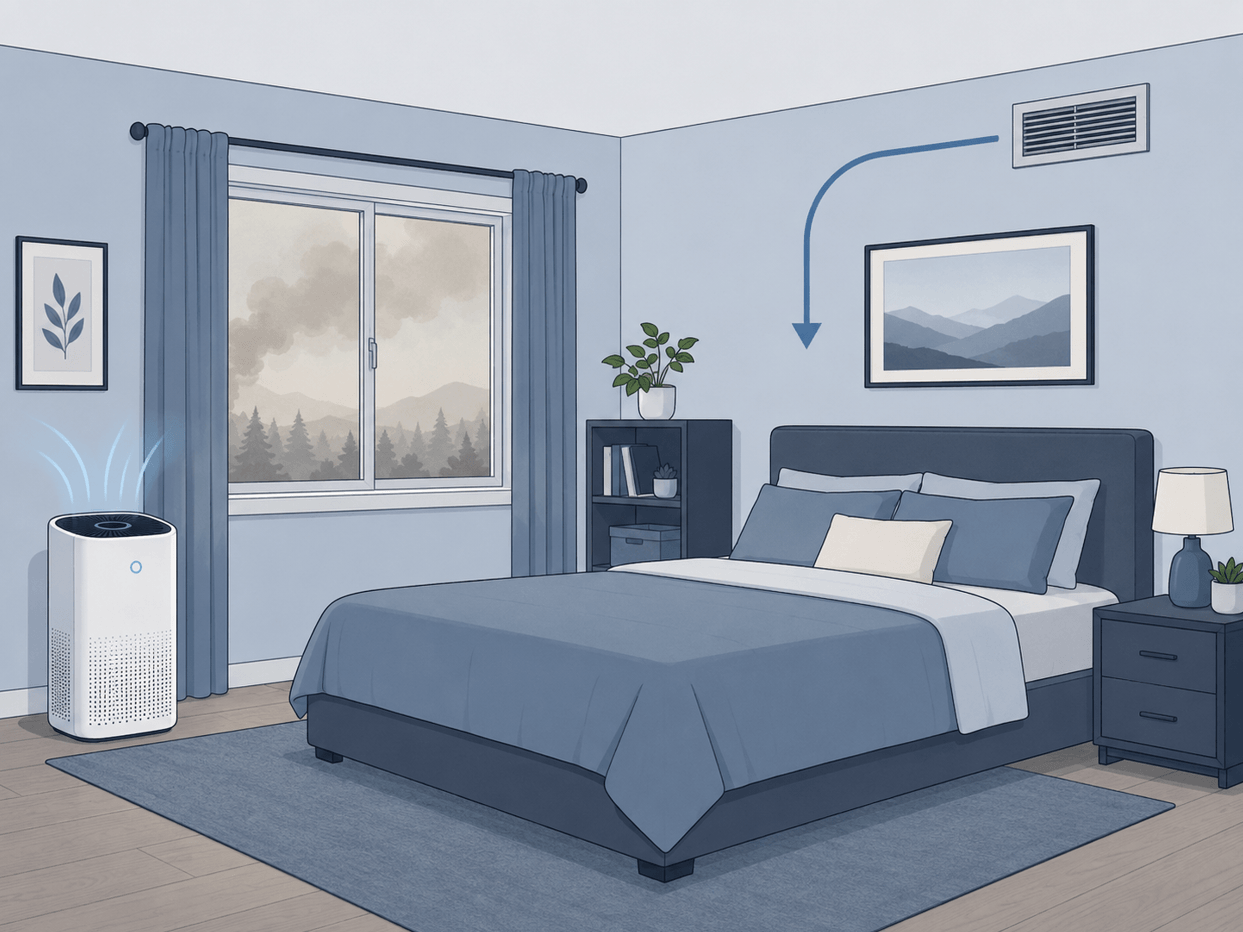
Filter strategy works alongside a few other steps: switching the HVAC system to recirculate mode so it stops drawing in smoky outside air, running the fan continuously so indoor air keeps cycling through the filter, and setting up a clean air room stocked with a portable air cleaner for the household to gather in during the worst hours.
Skip activities that add more particles indoors while smoke is active, including frying or broiling food, burning candles or incense, and vacuuming with anything other than a HEPA-equipped vacuum. Track local conditions on the AirNow Fire and Smoke Map so the household knows when the Air Quality Index (AQI) is high enough to move indoors and seal up the house.
Anyone who has to go outside during heavy smoke needs more than a cloth or surgical mask. The EPA recommends a NIOSH-approved N95 or P100 respirator with two head straps and a snug seal, since a loose fit or a one-strap dust mask lets smoke leak in around the edges.
For the parts of the checklist that involve the building itself, a trusted local HVAC company's guide on sealing gaps that let smoke into a house covers weatherstripping and duct inspection in more depth than a filter checklist alone can.
"When smoke season hits, the checklist item people skip first is confirming their unit actually takes a 16x22.25x4, not a rounded size that just looks close on the shelf. I've seen units left running unprotected for days simply because nobody checked the filter slot before the smoke arrived."
-Etta Duskin
7 Trusted Resources For Every 16x22.25x4 Air Filter Decision
These seven resources cover the three things a 16x22.25x4 filter buyer needs most: picking the right MERV rating, keeping the HVAC system running efficiently, and tracking wildfire smoke risk in real time.
Learn Which MERV Rating Actually Fits Your HVAC System
The EPA's Guide to Air Cleaners in the Home breaks down MERV, FPR, and CADR ratings in plain terms and explains how to confirm the highest rating a specific furnace or HVAC system can handle. It is the fastest way to avoid buying a filter that restricts airflow.
Build A Smoke-Ready Plan Before Fire Season Peaks
The CDC's Preparing for Wildfires page walks through setting up a clean room, choosing a NIOSH-approved respirator, and planning for household members with asthma or heart disease. It is written for households, not just emergency planners.
Keep Filter Costs Down With The Right Maintenance Cadence
ENERGY STAR's Heat & Cool Efficiently guide lays out a monthly filter-check habit and a yearly HVAC tune-up schedule that prevents the wasted energy and early equipment failure a dirty filter causes.
Check Regional Fire Risk Before Smoke Reaches Your Home
NOAA's National Weather Service Fire Weather page maps active red flag warnings and fire weather outlooks by region, giving an early signal of when to switch the HVAC system to recirculate mode.
Compare HVAC Filters Against Portable And DIY Air Cleaners
The American Lung Association's Air Cleaning page compares whole-house HVAC filters, portable HEPA units, and DIY box-fan cleaners side by side, including realistic filter costs and replacement timelines.
Protect Household Members With Asthma Or Allergies
The Asthma and Allergy Foundation of America's Steps to Improve Your Home's Indoor Air Quality covers source control and ventilation alongside filtration, since a new filter alone will not fix an allergy or asthma trigger problem.
Track Active Wildfires Affecting Air Quality Nationwide
The National Interagency Fire Center's National Fire News page publishes daily wildfire activity and national preparedness levels, useful for gauging how active the current smoke season is before deciding whether a filter upgrade is urgent.
Supporting Statistics
Three data points behind this checklist:
1 in 13 Americans have asthma.
Fine particles from wildfire smoke hit this group hardest.
Under-filtered indoor air adds to that risk.
Source: NHLBI, NIH – What Is Asthma?
U.S. wildfires burn about 7 million acres a year.
That is the 2014-2023 annual average.
A smoke-season filter check is a routine task, not a rare one.
Source: USAFacts – How Much Land Do Wildfires Burn In The US?
Heating and cooling use about 40% of a home's energy.
A clogged or undersized filter forces the system to work harder.
That shows up on the utility bill, not just the air quality reading.
Source: U.S. Energy Information Administration – RECS Release
Final Thoughts And Opinion
Every wildfire smoke season follows the same pattern. Households ignore air quality until their eyes start burning indoors. By then, the filter has usually been sitting at MERV 8 for years.
MERV 8 protects the blower motor. It does not stop fine smoke particles.
A MERV check takes five minutes.
It is the one step in this checklist a household fully controls, regardless of outdoor air quality.
Our take is simple. Give the MERV rating the same seasonal attention already given to smoke detectors and HVAC tune-ups.
Frequently Asked Questions
Q: What MERV Rating Stops Wildfire Smoke?
A: The EPA recommends MERV 13 as the minimum filter rating for capturing the fine particles found in wildfire smoke. Lower ratings such as MERV 8 or MERV 11 are built to protect HVAC equipment and catch everyday dust, not fine smoke particulate.
Q: How Do I Know If My Area's Air Quality Is Bad Enough To Act?
A: Check the AirNow Fire and Smoke Map for the current Air Quality Index reading in the area. A rising AQI is a good signal to switch to recirculate mode, seal windows, and move to a clean air room.
Q: Is It Safe To Run My HVAC Fan Constantly During A Smoke Event?
A: Yes. The EPA recommends running the HVAC fan continuously during a smoke event so indoor air keeps passing through the filter. Set the system to recirculate mode first, so it is not pulling in smoky outside air while the fan runs.
Q: Can A DIY Box Fan Filter Replace A Whole-House Filter Upgrade?
A: A DIY box fan and filter setup can help clean the air in a single room, but it works best as a backup for a clean air room, not as a substitute for upgrading the whole-house HVAC filter to MERV 13.
Q: Do I Need A Bigger Or Different Size Filter For Wildfire Smoke?
A: No. The filter size stays the same. What changes for smoke season is the MERV rating, not the dimensions, so a home already running a 16x22.25x4 filter only needs to confirm it is rated MERV 13.
Take The Next Step Before Smoke Season Peaks
Owners of a 16x22.25x4 air filter now have everything needed to get ready for wildfire smoke season. Check the MERV rating on your filter today, and upgrade to MERV 13 before the next smoke advisory hits your area.
Glossary
MERV Rating: A 1-16 scale, short for Minimum Efficiency Reporting Value, that measures how well an air filter captures airborne particles of different sizes.
PM2.5: Fine particulate matter measuring 2.5 microns or smaller, the main health concern in wildfire smoke.
Recirculate Mode: An HVAC or air conditioning setting that keeps the system pulling from indoor air instead of drawing in outside air.
Clean Air Room: A single room sealed off from smoke and stocked with a portable air cleaner, used as a lower-exposure space during a smoke event.
Air Quality Index (AQI): The EPA's 0-500 scale for reporting how polluted outdoor air is at a given time and location.
Filterbuy: A U.S.-based direct-to-consumer manufacturer of pleated MERV-rated air filters, including the 16x22.25x4 size in MERV 8, MERV 11, and MERV 13.
Learn more about HVAC Care from one of our HVAC solutions branches…
Filterbuy HVAC Solutions - Weston FL
2573 Mayfair Lane Weston FL 33327
(754) 296-3528
https://maps.app.goo.gl/E3tjmKf5VSWYghGc7